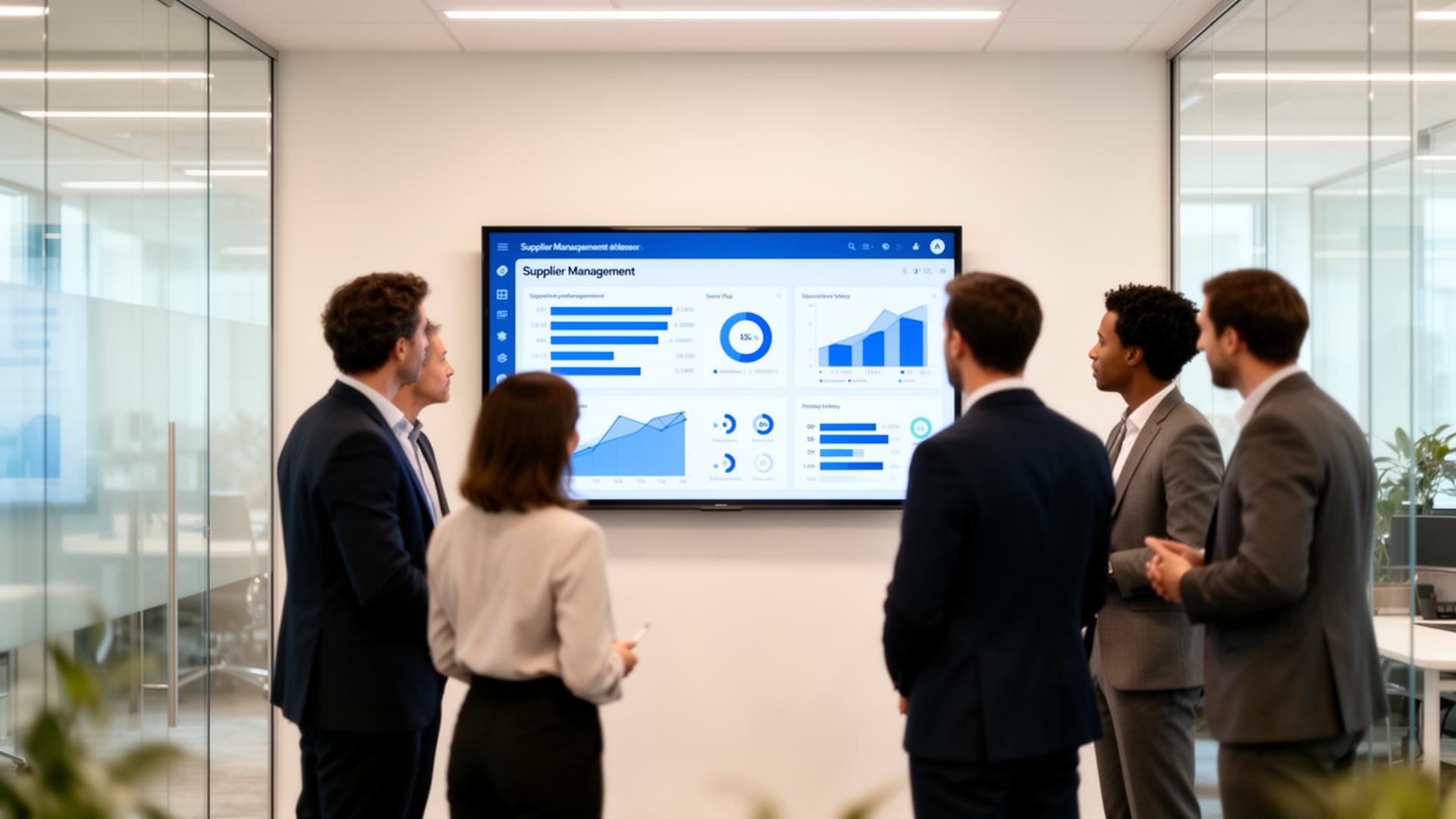
Supplier Portal for SAP in Latin America: Complete Guide 2026
TLDR
A supplier portal for SAP lets your suppliers check orders, upload invoices and verify payments directly connected to your ERP — no emails or phone calls needed. Egixia provides this functionality out-of-the-box with OData/BAPI/RFC connectors, zero ABAP code, in a 4-week implementation.
What is a SAP supplier portal?
A SAP supplier portal is a web platform that allows your suppliers to interact directly with your SAP ERP data: check purchase orders, upload electronic invoices, verify payment status and update their master data — all without accessing SAP directly or relying on emails or phone calls.
For companies using SAP ECC or SAP S/4HANA, the portal acts as a self-service layer connecting the supplier to MM (Materials Management) and FI (Finance) modules in real time, through OData, BAPI or RFC connectors.
The result: less operational burden on your procurement and AP teams, higher supplier satisfaction and complete traceability of all interactions.
SAP SLC vs. specialized portals: comparison table
SAP offers its own portal solution (SAP SLC / SAP Ariba), but it's not always the best option for companies in Latin America. This table summarizes the key differences:
| Criteria | SAP SLC / Ariba | Specialized portal (Egixia) |
|---|---|---|
| Implementation time | 4-6 months | 4 weeks |
| Total cost (TCO) | High (licensing + consulting) | 70% less vs Ariba |
| ABAP code required | Frequent for customizations | 0 lines |
| LATAM adaptation | Limited (DIAN, SAT, SUNAT) | Native |
| Local support | Global (English) | ES/EN/PT, LATAM |
| Supplier experience | Complex (Fiori interface) | Intuitive, 24/7 self-service |
| Supplier onboarding | Manual or semi-automatic | Digital with auto-validation |
| E-invoicing | Requires add-ons | Built-in (XML, CFDI, NF-e) |
For companies that already have SAP and need a portal quickly, a specialized portal like Egixia offers the same SAP integration with less complexity, lower cost and real adaptation to the Latin American context.
Integration requirements with SAP ECC and S/4HANA
A SAP supplier portal must communicate with the ERP in real time. These are the protocols and SAP objects a robust integration should support:
Protocolos
OData v2/v4
Standard protocol for reading and writing data in SAP S/4HANA.
BAPI
Business interfaces (e.g. BAPI_INCOMINGINVOICE_CREATE for invoice injection).
RFC
Remote function calls for real-time queries.
IDocs
Intermediate documents for bulk master data exchange.
Integration architecture
SAP ECC / S/4HANA ↔ Egixia Cloud (API Gateway) ↔ Supplier Web Portal
Purchase Order MM
Order visibility for the supplier.
Invoice (MIRO) FI/MM
Invoice submission and preliminary posting.
Vendor Master MM
Supplier master data (LFA1/LFB1).
Payment Status FI
Payment status and clearings.
Service Entry Sheet MM-SRV
Service approval from the portal.
Contract MM
Framework contracts and commercial terms.
5 key features a SAP supplier portal must have
Real-time purchase order visibility
Suppliers see their POs directly from SAP MM, with updated quantities, prices and delivery dates.
E-invoice upload and validation
Invoice submission (XML, CFDI, NF-e) with automatic validation against the PO and goods receipt (3-way match).
Payment status without calling AP
Suppliers check their payment date, amount and clearing status directly from SAP FI.
Master data updates
Changes to banking, tax or contact data are sent to SAP Vendor Master with approval workflows.
Digital onboarding with auto-validation
New suppliers register, upload documents and go through configurable approval workflows without manual intervention.
Use case: supplier self-service connected to SAP in LATAM
A pharmaceutical company in Colombia with SAP S/4HANA and 800+ active suppliers was receiving 200+ monthly emails from suppliers asking about payment status, orders and invoices.
With the Egixia portal integrated to SAP:
- 85% of inquiries resolved through self-service
- 62% fewer emails to the procurement team
- Invoices injected directly into SAP via BAPI
- Onboarding time reduced from 15 to 3 days
- Local support in Spanish with SAP expertise
Illustrative scenario · Pharmaceutical, Colombia
What usually weighs on a comparison like this: against SAP Ariba or in-house ABAP development, the portal goes live in weeks, not months, with no Z code in the ERP and with support in the team own language and time zone.
How to implement a SAP supplier portal in weeks (not months)
Week 1: Connector setup
OData/BAPI/RFC connectors between SAP and Egixia Cloud are activated. No ABAP code.
Week 2: Data mapping & customization
SAP objects to sync are configured and the portal is customized to match the company's brand and workflows.
Week 3: Functional testing
End-to-end testing with real data: orders, invoices, payments and onboarding.
Week 4: Go-live & training
Portal launch with dedicated support and training for the team and first suppliers.
Frequently asked questions about SAP supplier portals
References
- SAP Help Portal — SAP SLC Documentation
- Gartner — Magic Quadrant for Procure-to-Pay Suites, 2025
- Egixia — SAP Integration Technical Documentation
Using SAP and need a supplier portal?
Schedule a technical session with our SAP architect. We'll show you the integration working with real data.
Ready to digitize your procurement?
Discover how Egixia automates the full Procure-to-Pay cycle with AI, SAP/Oracle integration, and local LATAM support.