Free Guide · PDF · 15 pages

    Strategic Nearshoring Guide for Procurement in LATAM 2026

    Discover how leading companies in the region are reshoring their supply chain to gain competitiveness, reduce costs and comply with local regulations. Detailed analysis of Mexico, Colombia, Chile and Peru.

    Schedule demo

    No forms · 100% free · Direct download

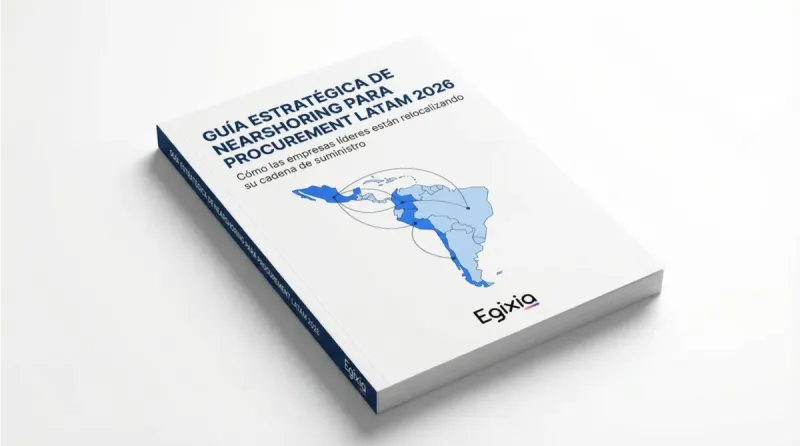
    Cover Strategic Nearshoring Guide for Procurement in LATAM 2026 — Egixia

    Why a nearshoring guide for procurement in LATAM?

    Nearshoring has become one of the most relevant strategies for procurement teams in Latin America. The pandemic, geopolitical tensions and the reconfiguration of global supply chains have accelerated the need to relocate suppliers to closer, more stable and competitive markets.

    This 15-page guide offers a comprehensive analysis of the nearshoring landscape in the region, with data updated to 2026 and practical recommendations for CPOs, procurement directors, COOs and supply chain leaders in large manufacturing, retail, pharmaceutical, energy and food companies.

    Topics covered include: the macroeconomic context driving nearshoring, Mexico's competitive advantages (USMCA, advanced manufacturing), Colombia (tech talent, competitive costs), Chile and Peru (institutional stability, strategic sectors), as well as a due diligence checklist for evaluating nearshore suppliers and real success stories in the region.
    What will you learn from this guide?

    Complete overview of nearshoring in LATAM for procurement

    Detailed country-by-country analysis: Mexico, Colombia, Chile, Peru and more

    Competitive advantages and savings opportunities by region

    Risks, compliance and regulatory frameworks to consider

    Step-by-step checklist for evaluating nearshore suppliers

    Success stories and lessons learned from regional companies

    Guide contents

    1. 1Introduction to Nearshoring in LATAM
    2. 2Macroeconomic context and 2025-2026 trends
    3. 3Mexico: industrial hub and USMCA advantage
    4. 4Colombia: tech talent and competitive costs
    5. 5Chile and Peru: stability and strategic sectors
    6. 6How to evaluate nearshore suppliers
    7. 7Due diligence checklist
    8. 8Risks and mitigation
    9. 9Integration with procurement platforms
    10. 10Success stories in the region
    11. 11Conclusions and next steps

    Frequently asked questions about nearshoring in procurement

    What is nearshoring in procurement?

    Nearshoring in procurement is the strategy of relocating the supply chain to geographically closer countries to reduce logistics costs, improve delivery times and mitigate geopolitical risks. In Latin America, countries like Mexico, Colombia and Chile have become strategic hubs for companies looking to diversify their suppliers away from Asia.

    What are the main benefits of nearshoring in LATAM?

    The main benefits include: reduced logistics costs and delivery times, compatible time zones for real-time collaboration, favorable trade agreements (such as USMCA in Mexico), competitive technical talent, and more agile compliance with regional regulations and ESG standards.

    How to evaluate nearshore suppliers in Latin America?

    Nearshore supplier evaluation should consider: production capacity and scalability, quality certifications (ISO, GMP), local regulatory and tax compliance, logistics infrastructure, financial stability, verifiable business references, and alignment with corporate ESG policies. A structured due diligence checklist is recommended.

    Download the complete guide — it's free

    No forms, no registration. All our resources are 100% free because we believe knowledge should be accessible to all procurement professionals in LATAM.

    🙏 Found it useful? Help us reach more procurement professionals by following us on LinkedIn.

    Follow Egixia on LinkedIn

    Ready to digitize your procurement?

    Schedule a personalized demo and discover how Egixia can help you simplify your entire purchasing cycle.

    Schedule free demo